

OPANIN ABRAHAM KWAKU ADUSEI
GENERAL SUPERINTENDENT OF THE SAVIOUR CHURCH OF GHANA
(Religious Leader, Educator, Agriculturist, Public Servant and Nation Builder)
INTRODUCTION
GENERAL SUPERINTENDENT OF THE SAVIOUR CHURCH
Op. Abraham Kwaku Adusei as The General Superintendent, occupies a position of considerable responsibility because the Saviour Church is not merely a local congregation. The church describes itself as having branches across Ghana with thousands of members. Consequently, the General Superintendent’s responsibilities involve spiritual leadership as well as institutional administration.
OPANIN ABRAM K. DUSEI
EARLY LIFE AND ORIGINS
Available biographical reporting gives 21 June 1946 as Opanin Abraham Kwaku Adusei’s date of birth and identifies him with Osiem in Ghana’s Eastern Region. His life therefore developed within the geographical environment that is deeply connected with the history of the Saviour Church. Osiem is not simply an incidental location in his biography. It is the historical home of the Saviour Church founded in 1924 and the place from which the Opanin Samuel Brako tradition expanded.
The present Saviour Church itself identifies Osiem as the location where the denomination was founded. This geographical connection is important because Opanin Abraham’s later religious leadership did not take him into an unrelated institution. He became a major figure in the same historic Christian community whose roots were planted at Osiem.
LEADERSHIP AFTER OPANIN ISAAC ASIRIFI
The leadership of the Saviour Church passed through an important historical period following the death of Opanin Isaac Asirifi. Opnin Isaac who succeeded the founder, Opanin Samuel Brako and became an important figure in the expansion of the church. After the death of Opanin Isaac, Opanin Abraham became the next General Superintendent as he was even handling the Church as the Assistant to Opanin Isaac long before his death.
Opanin Abraham Kwaku Adusei belongs naturally within various projects. His story connects with;
- Scripture
- Sabbath
- Christian Leadership
- Education
- Healthcare
- Agriculture
- National Service.
His life therefore demonstrates how religious conviction can extend into practical human development. The history of the Saviour Church of Ghana cannot be fully told without giving serious attention to Opanin Abraham Kwaku Adusei, a prominent figure in the modern development of the church.
The official Saviour Church of Ghana website identifies him as its General Superintendent and presents his leadership as a continuation of the work of the church’s founder, Opanin Samuel Brako, and the extensive evangelistic work of Opanin Isaac Asirifi.
But Opanin Abraham Adusei’s public life extends beyond ecclesiastical leadership. He has been associated with;
- Christian Ministry,
- Education,
- Agriculture,
- Healthcare,
- Community Development,
- Public Service,
- Philanthropy,and
- National Agricultural Development.
His life therefore provides an unusual example of a Ghanaian religious leader whose work has extended into several dimensions of national life.
In December 2025, his wider contribution received one of Ghana’s most significant national recognition when he was named Overall National Best Farmer for 2025 at the 41st National Farmers’ Day celebration. Ghana’s Ministry of Food and Agriculture records him as the Overall National Best Farmer for 2025 and lists a GH¢1.2 million award from ADB among the prizes attached to the honour. Internationally, he became the Chairman of all worldwide council of Best Farmers.
EDUCATIONAL FORMATION
Published biographical information describes Opanin Abraham as having been trained as a teacher, with university specialization in Chemistry and History. He has been an Education Officer at the Eastern Region before becoming the Headmaster of AME Zion Senior High School at Akim Tafo before his retirement from active service to continue with the ministry of God.
This educational background helps explain the breadth of his subsequent interests. Chemistry represents the scientific dimension of his education. History represents the humanistic and social dimension. Teaching represents the practical dimension of communicating knowledge to others.
These three areas, Science, History and Education, would later find echoes in his involvement with schools, institutional management and Agricultural development. His life consequently demonstrates how Formal Education can become a foundation for service in areas far beyond the classroom.
THE TEACHER
Before becoming widely known as a Church Leader and Agriculturist, Opanin Adusei was trained as an Educator. Teaching is particularly significant in understanding his later philosophy. A teacher does not merely transfer information. A teacher;
- Forms Minds,
- Builds Character,
- Develops Discipline,
- Encourages Responsibility, and
- Prepares The Next Generation.
This philosophy appears to remain visible in the modern mission of the Saviour Church. The church states that its mission is: “To equip the upcoming generation with outstanding moral and spiritual values rooted in the Word of God.” The combination of Education and Moral Formation is therefore central to the institutional vision associated with his leadership.
HIS CHRISTIAN CALLING
Opanin Abraham’s public identity became closely associated with the Saviour Church of Ghana. The church’s own history places him within the line of leadership following Opanin Samuel Brako and Opanin Isaac Asirifi. Its current website describes the church as a Christ-centred and Spirit-led indigenous Christian denomination founded at Osiem in 1924 and identifies Opanin Abraham as its current General Superintendent.
His religious philosophy is succinctly expressed in a statement attributed to him by the church which is “Christianity is a way of life.” This statement is so paramount as it means Christianity should not be confined to: Church Buildings, Sabbath Services, Preaching, or Religious Ceremonies. Christianity must become visible in the believer’s conduct.
CHRISTIANITY AS A WAY OF LIFE
The principle that Christianity is a way of life has deep biblical foundations as is evident with what James wrote: “But be ye doers of the word, and not hearers only, deceiving your own selves.” (James 1:22) The Apostle John similarly teaches: “My little children, let us not love in word, neither in tongue; but in deed and in truth.” (1 John 3:18)
These passages provide a useful theological framework for understanding the philosophy associated with Opanin Abraham. Christianity must become visible. Faith should influence; Family Life, Work, Business, Leadership, Education, Agriculture, Healthcare, and Service To Society.
PUBLIC SERVICE
Opanin Abraham has also served Ghana in public life. Published biographical reporting states that he represented the Eastern Region on Ghana’s Council of State from 2013 to 2017. A historical listing of Council of State members also identifies Opanin Abraham Kwaku Adusei among Presidential Appointees during the relevant period.
The Council of State is constitutionally established to counsel the President in the performance of Presidential Functions. His participation therefore placed a religious leader and community development figure within Ghana’s National Advisory Structure.
NATIONAL SERVICE
Public service requires a broader vision than denominational leadership. A church leader may be concerned principally with members of a congregation. A national Public Servant must consider:
- The Entire Population,
- Regional Development,
- Economic Opportunity,
- Social Stability,and
- National Welfare.
Opanin Abraham’s public service encompasses the said qualities, therefore forms another dimension of his life of service.
AGRICULTURE
Agriculture has become one of the most prominent aspects of Opanin Abraham’s public identity. Citi Newsroom describes him as a commercial Agriculturist whose work has included large-scale farming and rural development. It reports that he has managed substantial cocoa plantations and participated in the development of church-owned farmland for crops including maize, yam, mango and vegetables.
The achievement is especially notable because Agricultural work was sustained over decades. His farming career is not a short-term project undertaken for publicity.
Reports associated with his 2025 national award state that he had been farming for approximately 44 years.
COCOA FARMING
Cocoa has been an important component of Opanin Abraham’s Agricultural career. A 2014 profile reported that he was born on 21 June 1946 and described him as a major cocoa farmer.
Later reporting associated with his 2025 National Best Farmer award states that he manages substantial cocoa plantations across Ghana. His Agricultural achievement therefore spans several decades.
NATIONAL BEST FARMER 2025
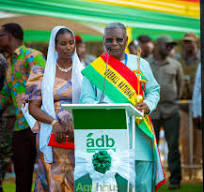
One of the greatest public recognitions of his life came in December 2025. At Ghana’s 41st National Farmers’ Day celebration, Opanin Abraham Kwaku Adusei was named: OVERALL NATIONAL BEST FARMER, 2025
The award was officially recorded by Ghana’s Ministry of Food and Agriculture. The Ghana News Agency also reported that Opanin Abraham Kwaku Adusei of Kwahu Afram Plains was adjudged the Overall National Best Farmer for 2025. This transformed his agricultural achievements into a National Honour.
THE NATIONAL AWARD PACKAGE
The Ministry of Food and Agriculture lists among the prizes associated with the award: GH¢1.2 million from ADB, a tractor with implements, a power tiller and trailer, motorized sprayers, cutlasses, knapsack sprayers, Wellington boots, and agricultural chemicals.
The significance of the award goes beyond the value of the prizes. It represents official national recognition of Agricultural productivity and contribution to Ghana’s food system.
AGRICULTURE AND CHRISTIANITY
Opanin Abraham’s Agricultural career is particularly interesting when considered alongside his religious leadership. The Bible itself begins with humanity placed within a productive environment. God said: “And the LORD God took the man, and put him into the garden of Eden to dress it and to keep it.” (Genesis 2:15)
Work and cultivation therefore appear in Scripture as part of humanity’s original responsibility. Agriculture can consequently be understood as more than an economic occupation. It can become an expression of: Work, Responsibility, Stewardship, Food Production, and Service to Humanity.
GYIDIMAN FARMS
The Agricultural programme associated with the Saviour Church is represented prominently by Gyidiman Farms. The farm describes itself as a major agricultural enterprise associated with the church and its leadership.
The Saviour Church itself identifies Agriculture as one of its four principal areas of modern activity and states that the church uses Gyidiman Farms to support livelihoods, encourage hard work and contribute to national development. This makes agriculture an institutional rather than merely personal component of Opanin Abraham’s leadership.
EDUCATION
Education is another major area associated with Opanin Abraham’s leadership. The Saviour Church states that it invests in education to raise a generation that is: Morally Upright, Spiritually Grounded, and Academically Prepared.
This is remarkably consistent with Op. Abraham’s own background as a trained teacher. The teacher who once educated individuals became involved in the development of institutions capable of educating generations.
SCHOOLS
Published reporting associated with Opanin Abraham’s 2025 national recognition states that under his leadership the Saviour Church has built 28 Basic Schools, a Nursing College and a Senior High School.
The development of schools demonstrates a long-term investment in young people. A church may preach about the future.An educational institution helps to build that future.
SAVIOUR SENIOR HIGH SCHOOL
The Saviour Church’s educational work includes Saviour Senior High School at Osiem. The school represents an institutional expression of the church’s commitment to combining academic development with moral and spiritual formation.
The school’s connection with the church is therefore important in understanding the practical meaning of the church’s philosophy: “Christianity is a way of life.” Christian education becomes part of that way of life.
HEALTHCARE
Healthcare is another major dimension of the modern Saviour Church. The church’s official website states: “We are committed to providing good healthcare to the society through our various healthcare centres across the country.”This reflects a Christian understanding that service to God includes concern for the physical wellbeing of people. Jesus demonstrated compassion toward the sick throughout his ministry.
The Gospel records: “And Jesus went about all the cities and villages, teaching in their synagogues, and preaching the gospel of the kingdom, and healing every sickness and every disease among the people.” (Matthew 9:35)
HAWA MEMORIAL HOSPITAL
Published reporting on Opanin Abraham’s achievements identifies Hawa Memorial Hospital at Osiem among the Health Facilities associated with his leadership. The development of such facilities represents an important evolution of the church’s historic concern for healing. The early movement of the church emphasized prayer for the sick. The modern institution adds trained healthcare professionals and medical infrastructure to that concern.
NURSING AND MIDWIFERY TRAINING
The Saviour Church’s healthcare mission also includes professional training. The Saviour Church Nursing and Midwifery Training College at Osiem was established as part of the church’s Educational and Healthcare development.
This is significant because it combines: Education, Healthcare, Christian Service. It does not merely provide treatment. It also helps train the people who provide treatment.
COMMUNITY DEVELOPMENT
Opanin Abraham’s work has extended beyond church members. Published reporting on his career describes him as involved in community development, grassroots mobilisation and humanitarian interventions. This is important because Christian leadership can become socially transformative when religious institutions use their resources to respond to community needs.
HUMANITARIAN RESPONSE
One example occurred following the Akosombo Dam spillage. Reporting on the Saviour Church’s intervention described the distribution of food and other relief materials to affected communities in the Volta and Eastern Regions.
The relief included agricultural produce associated with the church’s farming operations. This demonstrates an important connection: Agriculture,Food and Humanitarian Relief. A farm can therefore become a resource for helping people in times of crisis.
YOUTH DEVELOPMENT
Opanin Abraham’s public philosophy also emphasizes young people. Agriculture, Education and Employment are closely connected in his development approach. Instead of presenting Agriculture as an occupation only for older rural workers, his work has promoted Agriculture as an economic opportunity for younger generations. This is particularly important for Ghana because youth employment remains one of the country’s major development challenges.
EMPLOYMENT CREATION
Large-scale Farming, Schools, Healthcare Institutions and Church Administration all require workers. Consequently, the institutional development associated with Opanin Abraham Adusei has created employment opportunities across several sectors.
These include:Teachers, Healthcare Professionals, Administrators, Agricultural Workers, Technical Staff, and Support Workers. The result is that religious institutional development can produce economic as well as spiritual benefits.
LEADERSHIP PHILOSOPHY
The phrase attributed to Opanin Abraham by the Saviour Church is: “Christianity is a way of life.” This short statement can be regarded as a key to understanding his public work. If Christianity is a way of life, then:
- A Christian Should Work.
- A Christian Should Educate.
- A Christian Should Care For The Sick.
- A Christian Should Help The Poor.
- A Christian Should Cultivate The Land.
- A Christian Should Build Communities.
- A Christian Should Protect Moral Values.
- A Christian Should Serve The Nation.
FAITH AND WORK
James wrote: “For as the body without the spirit is dead, so faith without works is dead also.” (James 2:26) Opanin Abraham’s public life provides an interesting practical illustration of this principle. His leadership is associated with both religious faith and practical works.
The church’s Schools, Healthcare Institutions and Agricultural enterprises demonstrate an attempt to convert institutional faith into practical service.
AGRICULTURE AS A NATIONAL DUTY
His 2025 National Best Farmer acceptance message reportedly emphasized irrigation and Agricultural Infrastructure, particularly in the Afram Plains. He argued that the region’s fertile land could contribute significantly to Ghana’s food supply if reliable water and infrastructure were provided.
This reveals a significant feature of his agricultural philosophy. He does not appear to view farming solely as a private commercial activity. He connects agriculture with:
- National Food Security
- Rural Development
- Employment
- Infrastructure and
- Economic Transformation.
THE AFRAM PLAINS
The Afram Plains has enormous Agricultural potential. Yet transportation, irrigation and infrastructure can determine whether agricultural potential becomes agricultural productivity.
Opanin Abraham’s public advocacy has therefore focused on the importance of roads, bridges and irrigation in agricultural regions. This is consistent with the broader development philosophy of turning rural land into productive economic territory.
A LIFETIME OF AGRICULTURAL SERVICE
The 2025 National Best Farmer recognition came after decades of agricultural work. Ghanaian reporting described Opanin Abraham as having approximately 44 years of farming experience at the time of the award. Thus, the award did not represent a sudden achievement. It represented national recognition of a long Agricultural Career.
THE 2014 INTERNATIONAL COCOA RECOGNITION
Published profiles have also associated Opanin Abraham Adusei with international recognition in cocoa production, describing him as “He has also received significant global recognition for his cocoa-farming achievements.”
PUBLIC AND RELIGIOUS LEADERSHIP
Opanin Abraham’s career brings together several forms of leadership namely;
- Religious leadership through the Saviour Church;
- Educational leadership through schools and training institutions;
- Agricultural leadership through large-scale farming;
- Public leadership through service on the Council of State; and
- Community leadership through social and humanitarian initiatives.
Few Ghanaian religious figures have such a broad combination of responsibilities.
THE ROLE OF DISCIPLINE
The Saviour Church’s official mission places strong emphasis upon moral values, discipline and integrity. This emphasis fits naturally with Opanin Abraham’s Educational background and Religious Philosophy.
The church states that it is committed to: “Upholding holiness and moral integrity” and “Raising a generation grounded in faith and discipline.” These principles appear to define the institution he currently leads.
LEADERSHIP AND HOLINESS
The Biblical principle behind such leadership is found in Paul’s instruction; “Moreover it is required in stewards, that a man be found faithful.” (1 Corinthians 4:2).
- Leadership is Stewardship.
- The leader does not own the institution.
- The leader is entrusted with responsibility.
This is particularly relevant to the office of General Superintendent.
LEADERSHIP AND SERVICE
Jesus taught: “But he that is greatest among you shall be your servant.”
(Matthew 23:11). The concept of servant leadership provides an appropriate framework for understanding the combination of church leadership and community development. The leader serves; God, The Church, The Community, and The Nation.
THE SIGNIFICANCE OF THE NATIONAL BEST FARMER AWARD
The 2025 award is significant for another reason. It placed a Senior Christian Leader at the centre of Ghana’s national Agricultural Celebration. His achievement therefore became a meeting point between:
- Religion And Agriculture,
- Faith And Work,
- Church And Nation,
- Spiritual Leadership And Economic Development.
This makes his biography particularly appropriate for a historical work interested in the wider influence of Christian institutions.
HIS LEGACY IN EDUCATION
The educational legacy associated with his leadership can be summarized in three objectives:
- Knowledge: Students should receive academic preparation.
- Character: Students should develop moral discipline.
- Purpose: Students should understand that education should be used to serve society.
The Saviour Church’s official mission explicitly links Education with Moral, Spiritual and Academic Development.
HIS LEGACY IN HEALTHCARE
His healthcare legacy similarly has three dimensions: Care for the sick, Training of healthcare professionals, Expansion of healthcare access. The church’s healthcare programme therefore combines direct service with professional education.
HIS LEGACY IN AGRICULTURE
Agriculture represents perhaps the most visible economic dimension of his legacy. Through farming, he has demonstrated that: land can become productive, Agriculture can create employment, Food Production can support national development, and Religious Institutions can participate in economic transformation.
HIS LEGACY IN PUBLIC SERVICE
His Council of State service from 2013 to 2017 added another dimension. The religious leader became a national adviser. This meant that his responsibilities extended beyond the membership of the Saviour Church to the wider national interest.
THE MAN BEHIND THE INSTITUTIONS
It is easy when writing about a public figure to list institutions and awards. But institutions do not arise by themselves. They require: Vision, Leadership, Planning, Persistence, People, Financial Resources, and Long-term Commitment.
Opanin Abraham’s significance lies partly in his association with the development and management of institutions over an extended period.
51. HIS AGE AND CONTINUING SERVICE
Born in 1946, Opanin Abraham was 82 years old when he received the 2025 National Best Farmer award. His recognition at that age is particularly notable. It demonstrates that his Agricultural Career continued into advanced age. His life therefore provides an example of long-term commitment rather than short-term achievement.
THE LESSON OF PERSEVERANCE
The Apostle Paul wrote: “And let us not be weary in well doing: for in due season we shall reap, if we faint not.” (Galatians 6:9). A lifetime spent in farming, education, religious leadership and community development illustrates the value of perseverance. The National Best Farmer award came after decades of work. The institutions associated with the church similarly developed over many years.
THE LEGACY OF SERVICE
The central theme of Opanin Abraham’s public life can therefore be expressed as:
SERVICE
Service to: God, The Church, Young people, The sick, Farmers, Communities, and The nation. This corresponds closely with the official Saviour Church vision: “To propagate the faith and continuously improve our capacity to serve God, the Church, and humanity.”
HIS PLACE IN GHANAIAN CHRISTIAN HISTORY
Opanin Abraham Kwaku Adusei should be remembered within the larger history of Ghanaian Christianity. His story illustrates the evolution of an indigenous Christian denomination from a relatively localized Sabbath movement into an institution involved in multiple sectors of national life. That transformation is historically significant. It demonstrates that indigenous Christian institutions have not merely survived. They have developed.
HIS PLACE IN THE HISTORY OF THE SABBATH
His leadership also has importance for the history of Sabbath Christianity in Ghana. The Saviour Church remains associated with the tradition that originated with Op. Samuel Brako and Opanin Isaac. Therefore, Opanin Abraham’s leadership represents a later generation of Ghanaian Christian leadership carrying forward an indigenous Sabbath tradition.
His contributions are consequently, not merely administrative. They form part of the continuing history of a distinctive Ghanaian Christian interpretation of Scripture.
AN IMPORTANT HISTORICAL DISTINCTION
A scholarly biography should nevertheless distinguish between: what the church officially states, what courts have established, what news organizations have reported, and what remains church tradition or personal testimony. This is especially important concerning:
- Succession;
- Supernatural Experiences;
- Claims Of Miraculous Events;
- Exact Membership Numbers;
- Historical Titles;
- International Agricultural Awards.
Such distinctions do not weaken the biography. They strengthen it.
A BIBLICAL PRINCIPLE FOR HIS LIFE OF SERVICE
Jesus said: “Ye are the light of the world. A city that is set on an hill cannot be hid.” (Matthew 5:14). Christian leadership becomes meaningful when its influence is visible in the lives of people which are;
- Schools Educate.
- Hospitals Heal.
- Farms Feed.
- Churches Provide Spiritual Direction.
- Public Service Contributes To National Governance.
These are different forms of influence all which contribute to the welfare of the folks in a community and the country as a whole.
THE LEGACY OF A TEACHER
Perhaps one of the most beautiful ways of understanding Opanin Abraham’s life is to return to his beginnings as a teacher.
- A Teacher Plants Knowledge.
- A Farmer Plants Crops.
- A Pastor Plants Faith.
- A Community Leader Plants Institutions.
- In Each Case, The Work Is Ultimately About The Future.
- The Teacher Plants In The Mind.
- The Farmer Plants In The Soil.
- The Pastor Plants In The Heart.
- The Nation Receives The Harvest.
SUMMARY AND CONCLUSION
Opanin Abraham Kwaku Adusei occupies a distinctive place in the modern history of the Saviour Church of Ghana.
Born in 1946 at Osiem, he was trained as a teacher, with university specialization in Chemistry and History. His subsequent career developed across Religious Leadership, Education, Agriculture, Healthcare, Community Development And National Public Service.
He became the General Superintendent of the Saviour Church of Ghana, a position confirmed by the church’s own official website. His leadership belongs to the later chapter of the church’s long history, which began with Op. Samuel Brako at Osiem in 1924 and continued through the ministry of Op. Isaac Asirifi. His period of leadership has been marked by an expansion of the church’s practical involvement in society.
- Education Has Become a Major Concern.
- Healthcare Has Become a Major Concern.
- Agriculture Has Become a Major Concern.
- Community Development Has Become a Major Concern.
The church itself summarizes this philosophy through the statement associated with Opanin Abraham: “Christianity is a way of life.”
His agricultural career reached an extraordinary public milestone in December 2025, when Ghana named him Overall National Best Farmer for 2025. The Ministry of Food and Agriculture officially records the honour. The recognition is significant because it demonstrates that his contribution has extended beyond the walls of the church.
He has become known not only as a religious leader but also as an agriculturist and public servant. His service on Ghana’s Council of State from 2013 to 2017 added another dimension to his public career. His story is therefore one of faith translated into work. The biblical principle says: “For as the body without the spirit is dead, so faith without works is dead also.”
(James 2:26)
Whether one approaches his life from the perspective of Christianity, Ghanaian History, Agriculture, Education or Community Development, the central lesson remains the same: A LIFE OF FAITH MUST BECOME A LIFE OF SERVICE.
And in the history of the Saviour Church of Ghana, Opanin Abraham Adusei stands as one of the principal figures through whom that philosophy has been expressed in the modern era.
His legacy may ultimately be summarized in five words as follows;
1. FAITH
2. DISCIPLINE
3. EDUCATION
4. AGRICULTURE and
5. SERVICE. And above them all: CHRISTIANITY IS A WAY OF LIFE.
MAY THE ALMIGHTY RICHLY BLESS HIM FOR HIS CONTRIBUTIONS TO THE WELFARE AND SALVATION OF HUMANITY
GENERAL SUPERINTENDENT OF THE SAVIOUR CHURCH OF GHANA
(Religious Leader, Educator, Agriculturist, Public Servant and Nation Builder)
INTRODUCTION
GENERAL SUPERINTENDENT OF THE SAVIOUR CHURCH
The official Saviour Church website identifies Op. Abraham Kwaku Adusei as The General Superintendent It further states that the church has continued its development under his leadership. The General Superintendent occupies a position of considerable responsibility because the Saviour Church is not merely a local congregation.
The church describes itself as having branches across Ghana with thousands of members. Consequently, the General Superintendent’s responsibilities involve spiritual leadership as well as institutional administration.
EARLY LIFE AND ORIGINS
Available biographical reporting gives 21 June 1946 as Opanin Abraham Kwaku Adusei’s date of birth and identifies him with Osiem in Ghana’s Eastern Region. His life therefore developed within the geographical environment that is deeply connected with the history of the Saviour Church. Osiem is not simply an incidental location in his biography. It is the historical home of the Saviour Church founded in 1924 and the place from which the Opanin Samuel Brako tradition expanded.
The present Saviour Church itself identifies Osiem as the location where the denomination was founded. This geographical connection is important because Opanin Abraham’s later religious leadership did not take him into an unrelated institution. He became a major figure in the same historic Christian community whose roots were planted at Osiem.
LEADERSHIP AFTER ISAAC ASIRIFI
The leadership of the Saviour Church passed through an important historical period following the death of Opanin Isaac Asirifi. Opnin Isaac succeeded the founder, Opanin Samuel Brako and became an important figure in the expansion of the church. After the death of Opanin Isaac, Opanin Abraham became the next General Superintendent as he was even handling the Church as the Assistant to Opanin Isaac long before his death.
Opanin Abraham Kwaku Adusei belongs naturally within various projects. His story connects with;
- Scripture
- Sabbath
- Christian Leadership
- Education
- Healthcare
- Agriculture
- National Service.
His life therefore demonstrates how religious conviction can extend into practical human development. The history of the Saviour Church of Ghana cannot be fully told without giving serious attention to Opanin Abraham Kwaku Adusei, a prominent figure in the modern development of the church.
The official Saviour Church of Ghana website identifies him as its General Superintendent and presents his leadership as a continuation of the work of the church’s founder, Opanin Samuel Brako, and the extensive evangelistic work of Opanin Isaac Asirifi.
But Opanin Abraham Adusei’s public life extends beyond ecclesiastical leadership. He has been associated with;
- Christian Ministry,
- Education,
- Agriculture,
- Healthcare,
- Community Development,
- Public Service,
- Philanthropy,and
- National Agricultural Development.
His life therefore provides an unusual example of a Ghanaian religious leader whose work has extended into several dimensions of national life.
In December 2025, his wider contribution received one of Ghana’s most significant national recognition when he was named Overall National Best Farmer for 2025 at the 41st National Farmers’ Day celebration. Ghana’s Ministry of Food and Agriculture records him as the Overall National Best Farmer for 2025 and lists a GH¢1.2 million award from ADB among the prizes attached to the honour. Internationally, he became the Chairman of all worldwide council of Best Farmers.
EDUCATIONAL FORMATION
Published biographical information describes Opanin Abraham as having been trained as a teacher, with university specialization in Chemistry and History. He has been an Education Officer at the Eastern Region before becoming the Headmaster of AME Zion Senior High School at Akim Tafo before his retirement from active service to continue with the ministry of God.
This educational background helps explain the breadth of his subsequent interests. Chemistry represents the scientific dimension of his education. History represents the humanistic and social dimension. Teaching represents the practical dimension of communicating knowledge to others.
These three areas, Science, History and Education, would later find echoes in his involvement with schools, institutional management and Agricultural development. His life consequently demonstrates how Formal Education can become a foundation for service in areas far beyond the classroom.
THE TEACHER
Before becoming widely known as a Church Leader and Agriculturist, Opanin Adusei was trained as an Educator. Teaching is particularly significant in understanding his later philosophy. A teacher does not merely transfer information. A teacher;
- Forms Minds,
- Builds Character,
- Develops Discipline,
- Encourages Responsibility, and
- Prepares The Next Generation.
This philosophy appears to remain visible in the modern mission of the Saviour Church. The church states that its mission is: “To equip the upcoming generation with outstanding moral and spiritual values rooted in the Word of God.” The combination of Education and Moral Formation is therefore central to the institutional vision associated with his leadership.
HIS CHRISTIAN CALLING
Opanin Abraham’s public identity became closely associated with the Saviour Church of Ghana. The church’s own history places him within the line of leadership following Opanin Samuel Brako and Opanin Isaac Asirifi. Its current website describes the church as a Christ-centred and Spirit-led indigenous Christian denomination founded at Osiem in 1924 and identifies Opanin Abraham as its current General Superintendent.
His religious philosophy is succinctly expressed in a statement attributed to him by the church which is “Christianity is a way of life.” This statement is so paramount as it means Christianity should not be confined to: Church Buildings, Sabbath Services, Preaching, or Religious Ceremonies. Christianity must become visible in the believer’s conduct.
CHRISTIANITY AS A WAY OF LIFE
The principle that Christianity is a way of life has deep biblical foundations as is evident with what James wrote: “But be ye doers of the word, and not hearers only, deceiving your own selves.” (James 1:22) The Apostle John similarly teaches: “My little children, let us not love in word, neither in tongue; but in deed and in truth.” (1 John 3:18)
These passages provide a useful theological framework for understanding the philosophy associated with Opanin Abraham. Christianity must become visible. Faith should influence; Family Life, Work, Business, Leadership, Education, Agriculture, Healthcare, and Service To Society.
PUBLIC SERVICE
Opanin Abraham has also served Ghana in public life. Published biographical reporting states that he represented the Eastern Region on Ghana’s Council of State from 2013 to 2017. A historical listing of Council of State members also identifies Opanin Abraham Kwaku Adusei among Presidential Appointees during the relevant period.
The Council of State is constitutionally established to counsel the President in the performance of Presidential Functions. His participation therefore placed a religious leader and community development figure within Ghana’s National Advisory Structure.
NATIONAL SERVICE
Public service requires a broader vision than denominational leadership. A church leader may be concerned principally with members of a congregation. A national Public Servant must consider:
- The Entire Population,
- Regional Development,
- Economic Opportunity,
- Social Stability,and
- National Welfare.
Opanin Abraham’s public service encompasses the said qualities, therefore forms another dimension of his life of service.
AGRICULTURE
Agriculture has become one of the most prominent aspects of Opanin Abraham’s public identity. Citi Newsroom describes him as a commercial Agriculturist whose work has included large-scale farming and rural development. It reports that he has managed substantial cocoa plantations and participated in the development of church-owned farmland for crops including maize, yam, mango and vegetables.
The achievement is especially notable because Agricultural work was sustained over decades. His farming career is not a short-term project undertaken for publicity.
Reports associated with his 2025 national award state that he had been farming for approximately 44 years.
COCOA FARMING
Cocoa has been an important component of Opanin Abraham’s Agricultural career. A 2014 profile reported that he was born on 21 June 1946 and described him as a major cocoa farmer.
Later reporting associated with his 2025 National Best Farmer award states that he manages substantial cocoa plantations across Ghana. His Agricultural achievement therefore spans several decades.
NATIONAL BEST FARMER 2025
One of the greatest public recognitions of his life came in December 2025. At Ghana’s 41st National Farmers’ Day celebration, Opanin Abraham Kwaku Adusei was named: OVERALL NATIONAL BEST FARMER, 2025
The award was officially recorded by Ghana’s Ministry of Food and Agriculture. The Ghana News Agency also reported that Opanin Abraham Kwaku Adusei of Kwahu Afram Plains was adjudged the Overall National Best Farmer for 2025. This transformed his agricultural achievements into a National Honour.
THE NATIONAL AWARD PACKAGE
The Ministry of Food and Agriculture lists among the prizes associated with the award: GH¢1.2 million from ADB, a tractor with implements, a power tiller and trailer, motorized sprayers, cutlasses, knapsack sprayers, Wellington boots, and agricultural chemicals.
The significance of the award goes beyond the value of the prizes. It represents official national recognition of Agricultural productivity and contribution to Ghana’s food system.
AGRICULTURE AND CHRISTIANITY
Opanin Abraham’s Agricultural career is particularly interesting when considered alongside his religious leadership. The Bible itself begins with humanity placed within a productive environment. God said: “And the LORD God took the man, and put him into the garden of Eden to dress it and to keep it.” (Genesis 2:15)
Work and cultivation therefore appear in Scripture as part of humanity’s original responsibility. Agriculture can consequently be understood as more than an economic occupation. It can become an expression of: Work, Responsibility, Stewardship, Food Production, and Service to Humanity.
GYIDIMAN FARMS
The Agricultural programme associated with the Saviour Church is represented prominently by Gyidiman Farms. The farm describes itself as a major agricultural enterprise associated with the church and its leadership.
The Saviour Church itself identifies Agriculture as one of its four principal areas of modern activity and states that the church uses Gyidiman Farms to support livelihoods, encourage hard work and contribute to national development. This makes agriculture an institutional rather than merely personal component of Opanin Abraham’s leadership.
EDUCATION
Education is another major area associated with Opanin Abraham’s leadership. The Saviour Church states that it invests in education to raise a generation that is: Morally Upright, Spiritually Grounded, and Academically Prepared.
This is remarkably consistent with Op. Abraham’s own background as a trained teacher. The teacher who once educated individuals became involved in the development of institutions capable of educating generations.
SCHOOLS
Published reporting associated with Opanin Abraham’s 2025 national recognition states that under his leadership the Saviour Church has built 28 Basic Schools, a Nursing College and a Senior High School.
The development of schools demonstrates a long-term investment in young people. A church may preach about the future.An educational institution helps to build that future.
SAVIOUR SENIOR HIGH SCHOOL
The Saviour Church’s educational work includes Saviour Senior High School at Osiem. The school represents an institutional expression of the church’s commitment to combining academic development with moral and spiritual formation.
The school’s connection with the church is therefore important in understanding the practical meaning of the church’s philosophy: “Christianity is a way of life.” Christian education becomes part of that way of life.
HEALTHCARE
Healthcare is another major dimension of the modern Saviour Church. The church’s official website states: “We are committed to providing good healthcare to the society through our various healthcare centres across the country.”This reflects a Christian understanding that service to God includes concern for the physical wellbeing of people. Jesus demonstrated compassion toward the sick throughout his ministry.
The Gospel records: “And Jesus went about all the cities and villages, teaching in their synagogues, and preaching the gospel of the kingdom, and healing every sickness and every disease among the people.” (Matthew 9:35)
HAWA MEMORIAL HOSPITAL
Published reporting on Opanin Abraham’s achievements identifies Hawa Memorial Hospital at Osiem among the Health Facilities associated with his leadership. The development of such facilities represents an important evolution of the church’s historic concern for healing. The early movement of the church emphasized prayer for the sick. The modern institution adds trained healthcare professionals and medical infrastructure to that concern.
NURSING AND MIDWIFERY TRAINING
The Saviour Church’s healthcare mission also includes professional training. The Saviour Church Nursing and Midwifery Training College at Osiem was established as part of the church’s Educational and Healthcare development.
This is significant because it combines: Education, Healthcare, Christian Service. It does not merely provide treatment. It also helps train the people who provide treatment.
COMMUNITY DEVELOPMENT
Opanin Abraham’s work has extended beyond church members. Published reporting on his career describes him as involved in community development, grassroots mobilisation and humanitarian interventions. This is important because Christian leadership can become socially transformative when religious institutions use their resources to respond to community needs.
HUMANITARIAN RESPONSE
One example occurred following the Akosombo Dam spillage. Reporting on the Saviour Church’s intervention described the distribution of food and other relief materials to affected communities in the Volta and Eastern Regions.
The relief included agricultural produce associated with the church’s farming operations. This demonstrates an important connection: Agriculture,Food and Humanitarian Relief. A farm can therefore become a resource for helping people in times of crisis.
YOUTH DEVELOPMENT
Opanin Abraham’s public philosophy also emphasizes young people. Agriculture, Education and Employment are closely connected in his development approach. Instead of presenting Agriculture as an occupation only for older rural workers, his work has promoted Agriculture as an economic opportunity for younger generations. This is particularly important for Ghana because youth employment remains one of the country’s major development challenges.
EMPLOYMENT CREATION
Large-scale Farming, Schools, Healthcare Institutions and Church Administration all require workers. Consequently, the institutional development associated with Opanin Abraham Adusei has created employment opportunities across several sectors.
These include:Teachers, Healthcare Professionals, Administrators, Agricultural Workers, Technical Staff, and Support Workers. The result is that religious institutional development can produce economic as well as spiritual benefits.
LEADERSHIP PHILOSOPHY
The phrase attributed to Opanin Abraham by the Saviour Church is: “Christianity is a way of life.” This short statement can be regarded as a key to understanding his public work. If Christianity is a way of life, then:
- A Christian Should Work.
- A Christian Should Educate.
- A Christian Should Care For The Sick.
- A Christian Should Help The Poor.
- A Christian Should Cultivate The Land.
- A Christian Should Build Communities.
- A Christian Should Protect Moral Values.
- A Christian Should Serve The Nation.
FAITH AND WORK
James wrote: “For as the body without the spirit is dead, so faith without works is dead also.” (James 2:26) Opanin Abraham’s public life provides an interesting practical illustration of this principle. His leadership is associated with both religious faith and practical works.
The church’s Schools, Healthcare Institutions and Agricultural enterprises demonstrate an attempt to convert institutional faith into practical service.
AGRICULTURE AS A NATIONAL DUTY
His 2025 National Best Farmer acceptance message reportedly emphasized irrigation and Agricultural Infrastructure, particularly in the Afram Plains. He argued that the region’s fertile land could contribute significantly to Ghana’s food supply if reliable water and infrastructure were provided.
This reveals a significant feature of his agricultural philosophy. He does not appear to view farming solely as a private commercial activity. He connects agriculture with:
- National Food Security
- Rural Development
- Employment
- Infrastructure and
- Economic Transformation.
THE AFRAM PLAINS
The Afram Plains has enormous Agricultural potential. Yet transportation, irrigation and infrastructure can determine whether agricultural potential becomes agricultural productivity.
Opanin Abraham’s public advocacy has therefore focused on the importance of roads, bridges and irrigation in agricultural regions. This is consistent with the broader development philosophy of turning rural land into productive economic territory.
A LIFETIME OF AGRICULTURAL SERVICE
The 2025 National Best Farmer recognition came after decades of agricultural work. Ghanaian reporting described Opanin Abraham as having approximately 44 years of farming experience at the time of the award. Thus, the award did not represent a sudden achievement. It represented national recognition of a long Agricultural Career.
THE 2014 INTERNATIONAL COCOA RECOGNITION
Published profiles have also associated Opanin Abraham Adusei with international recognition in cocoa production, describing him as “He has also received significant global recognition for his cocoa-farming achievements.”
PUBLIC AND RELIGIOUS LEADERSHIP
Opanin Abraham’s career brings together several forms of leadership namely;
- Religious leadership through the Saviour Church;
- Educational leadership through schools and training institutions;
- Agricultural leadership through large-scale farming;
- Public leadership through service on the Council of State; and
- Community leadership through social and humanitarian initiatives.
Few Ghanaian religious figures have such a broad combination of responsibilities.
THE ROLE OF DISCIPLINE
The Saviour Church’s official mission places strong emphasis upon moral values, discipline and integrity. This emphasis fits naturally with Opanin Abraham’s Educational background and Religious Philosophy.
The church states that it is committed to: “Upholding holiness and moral integrity” and “Raising a generation grounded in faith and discipline.” These principles appear to define the institution he currently leads.
LEADERSHIP AND HOLINESS
The Biblical principle behind such leadership is found in Paul’s instruction; “Moreover it is required in stewards, that a man be found faithful.” (1 Corinthians 4:2).
- Leadership is Stewardship.
- The leader does not own the institution.
- The leader is entrusted with responsibility.
This is particularly relevant to the office of General Superintendent.
LEADERSHIP AND SERVICE
Jesus taught: “But he that is greatest among you shall be your servant.”
(Matthew 23:11). The concept of servant leadership provides an appropriate framework for understanding the combination of church leadership and community development. The leader serves; God, The Church, The Community, and The Nation.
THE SIGNIFICANCE OF THE NATIONAL BEST FARMER AWARD
The 2025 award is significant for another reason. It placed a Senior Christian Leader at the centre of Ghana’s national Agricultural Celebration. His achievement therefore became a meeting point between:
- Religion And Agriculture,
- Faith And Work,
- Church And Nation,
- Spiritual Leadership And Economic Development.
This makes his biography particularly appropriate for a historical work interested in the wider influence of Christian institutions.
HIS LEGACY IN EDUCATION
The educational legacy associated with his leadership can be summarized in three objectives:
- Knowledge: Students should receive academic preparation.
- Character: Students should develop moral discipline.
- Purpose: Students should understand that education should be used to serve society.
The Saviour Church’s official mission explicitly links Education with Moral, Spiritual and Academic Development.
HIS LEGACY IN HEALTHCARE
His healthcare legacy similarly has three dimensions: Care for the sick, Training of healthcare professionals, Expansion of healthcare access. The church’s healthcare programme therefore combines direct service with professional education.
HIS LEGACY IN AGRICULTURE
Agriculture represents perhaps the most visible economic dimension of his legacy. Through farming, he has demonstrated that: land can become productive, Agriculture can create employment, Food Production can support national development, and Religious Institutions can participate in economic transformation.
HIS LEGACY IN PUBLIC SERVICE
His Council of State service from 2013 to 2017 added another dimension. The religious leader became a national adviser. This meant that his responsibilities extended beyond the membership of the Saviour Church to the wider national interest.
THE MAN BEHIND THE INSTITUTIONS
It is easy when writing about a public figure to list institutions and awards. But institutions do not arise by themselves. They require: Vision, Leadership, Planning, Persistence, People, Financial Resources, and Long-term Commitment.
Opanin Abraham’s significance lies partly in his association with the development and management of institutions over an extended period.
51. HIS AGE AND CONTINUING SERVICE
Born in 1946, Opanin Abraham was 82 years old when he received the 2025 National Best Farmer award. His recognition at that age is particularly notable. It demonstrates that his Agricultural Career continued into advanced age. His life therefore provides an example of long-term commitment rather than short-term achievement.
THE LESSON OF PERSEVERANCE
The Apostle Paul wrote: “And let us not be weary in well doing: for in due season we shall reap, if we faint not.” (Galatians 6:9). A lifetime spent in farming, education, religious leadership and community development illustrates the value of perseverance. The National Best Farmer award came after decades of work. The institutions associated with the church similarly developed over many years.
THE LEGACY OF SERVICE
The central theme of Opanin Abraham’s public life can therefore be expressed as:
SERVICE
Service to: God, The Church, Young people, The sick, Farmers, Communities, and The nation. This corresponds closely with the official Saviour Church vision: “To propagate the faith and continuously improve our capacity to serve God, the Church, and humanity.”
HIS PLACE IN GHANAIAN CHRISTIAN HISTORY
Opanin Abraham Kwaku Adusei should be remembered within the larger history of Ghanaian Christianity. His story illustrates the evolution of an indigenous Christian denomination from a relatively localized Sabbath movement into an institution involved in multiple sectors of national life. That transformation is historically significant. It demonstrates that indigenous Christian institutions have not merely survived. They have developed.
HIS PLACE IN THE HISTORY OF THE SABBATH
His leadership also has importance for the history of Sabbath Christianity in Ghana. The Saviour Church remains associated with the tradition that originated with Op. Samuel Brako and Opanin Isaac. Therefore, Opanin Abraham’s leadership represents a later generation of Ghanaian Christian leadership carrying forward an indigenous Sabbath tradition.
His contributions are consequently, not merely administrative. They form part of the continuing history of a distinctive Ghanaian Christian interpretation of Scripture.
AN IMPORTANT HISTORICAL DISTINCTION
A scholarly biography should nevertheless distinguish between: what the church officially states, what courts have established, what news organizations have reported, and what remains church tradition or personal testimony. This is especially important concerning:
- Succession;
- Supernatural Experiences;
- Claims Of Miraculous Events;
- Exact Membership Numbers;
- Historical Titles;
- International Agricultural Awards.
Such distinctions do not weaken the biography. They strengthen it.
A BIBLICAL PRINCIPLE FOR HIS LIFE OF SERVICE
Jesus said: “Ye are the light of the world. A city that is set on an hill cannot be hid.” (Matthew 5:14). Christian leadership becomes meaningful when its influence is visible in the lives of people which are;
- Schools Educate.
- Hospitals Heal.
- Farms Feed.
- Churches Provide Spiritual Direction.
- Public Service Contributes To National Governance.
These are different forms of influence all which contribute to the welfare of the folks in a community and the country as a whole.
THE LEGACY OF A TEACHER
Perhaps one of the most beautiful ways of understanding Opanin Abraham’s life is to return to his beginnings as a teacher.
- A Teacher Plants Knowledge.
- A Farmer Plants Crops.
- A Pastor Plants Faith.
- A Community Leader Plants Institutions.
- In Each Case, The Work Is Ultimately About The Future.
- The Teacher Plants In The Mind.
- The Farmer Plants In The Soil.
- The Pastor Plants In The Heart.
- The Nation Receives The Harvest.
SUMMARY AND CONCLUSION
Opanin Abraham Kwaku Adusei occupies a distinctive place in the modern history of the Saviour Church of Ghana.
Born in 1946 at Osiem, he was trained as a teacher, with university specialization in Chemistry and History. His subsequent career developed across Religious Leadership, Education, Agriculture, Healthcare, Community Development And National Public Service.
He became the General Superintendent of the Saviour Church of Ghana, a position confirmed by the church’s own official website. His leadership belongs to the later chapter of the church’s long history, which began with Op. Samuel Brako at Osiem in 1924 and continued through the ministry of Op. Isaac Asirifi. His period of leadership has been marked by an expansion of the church’s practical involvement in society.
- Education Has Become a Major Concern.
- Healthcare Has Become a Major Concern.
- Agriculture Has Become a Major Concern.
- Community Development Has Become a Major Concern.
The church itself summarizes this philosophy through the statement associated with Opanin Abraham: “Christianity is a way of life.”
His agricultural career reached an extraordinary public milestone in December 2025, when Ghana named him Overall National Best Farmer for 2025. The Ministry of Food and Agriculture officially records the honour. The recognition is significant because it demonstrates that his contribution has extended beyond the walls of the church.
He has become known not only as a religious leader but also as an agriculturist and public servant. His service on Ghana’s Council of State from 2013 to 2017 added another dimension to his public career. His story is therefore one of faith translated into work. The biblical principle says: “For as the body without the spirit is dead, so faith without works is dead also.”
(James 2:26)
Whether one approaches his life from the perspective of Christianity, Ghanaian History, Agriculture, Education or Community Development, the central lesson remains the same:
A LIFE OF FAITH MUST BECOME A LIFE OF SERVICE.
And in the history of the Saviour Church of Ghana, Opanin Abraham Kwaku Adusei stands as one of the principal figures through whom that philosophy has been expressed in the modern era.
His legacy may ultimately be summarized in five words as follows;
1. FAITH
2. DISCIPLINE
3. EDUCATION
4. AGRICULTURE and
5. SERVICE. And above them all: CHRISTIANITY IS A WAY OF LIFE.
MAY THE ALMIGHTY RICHLY BLESS HIM FOR HIS CONTRIBUTIONS TO THE WELFARE AND SALVATION OF HUMANITY
